Choosing the right special use silicone hose for industrial applications requires more than comparing temperature ratings or selecting a suitable diameter. The hose must be compatible with the transported medium, withstand the actual operating pressure, accommodate mechanical movement, and fit the installation space. The most reliable selection process starts with operating conditions and then determines the appropriate material, reinforcement, and connection design.
For industrial equipment manufacturers, maintenance engineers, and purchasing teams, understanding these factors helps reduce premature hose failure, leakage, installation problems, and unnecessary replacement costs.
Quick Answer: Select an industrial silicone hose by evaluating five factors: operating temperature, pressure and vacuum conditions, fluid compatibility, mechanical requirements, and installation geometry. Confirm the complete hose specification with the manufacturer before approving the design for production.
Understand the Operating Conditions Before Selecting a Hose
The first step is to identify the conditions the hose will encounter throughout its service life. A hose that performs well during normal operation may still fail when exposed to temperature spikes, pressure fluctuations, chemical contamination, or repeated movement.
Before selecting a hose, establish the following operating requirements:
- Continuous operating temperature and maximum temperature excursions.
- Working pressure, pressure surges, and any vacuum conditions.
- The exact fluid, gas, coolant, or chemical being transported.
- Exposure to vibration, bending, abrasion, and external heat.
- Available installation space, connection dimensions, and required service life.
These conditions should be evaluated together. For example, a hose operating at elevated temperatures may experience faster material degradation when exposed to an incompatible fluid. Similarly, a reinforced hose may still fail if its pressure rating or connection design is unsuitable for the application.
Match the Silicone Hose Material to the Transported Medium
Chemical compatibility is one of the most important factors when selecting a special use silicone hose. Standard silicone rubber is suitable for many air-transfer and cooling applications, but it is not automatically compatible with every industrial fluid.
For applications involving petroleum fuels, oils, or aggressive chemicals, engineers should evaluate the inner lining and the complete hose construction rather than relying on the general properties of silicone.
RAINBOW offers fluororubber-lined silicone hoses for applications requiring additional resistance to fuels, oils, and certain chemicals. The inner lining provides a barrier against the transported medium, while the silicone exterior offers environmental resistance and flexibility.
However, a chemical-resistant hose should never be selected solely because its product description mentions chemical resistance. Compatibility depends on the specific chemical, concentration, temperature, exposure duration, and pressure conditions.
For chemical transfer applications, provide the manufacturer with the exact chemical name and concentration. Where necessary, request compatibility data or testing evidence for the intended operating conditions.
Choose the Right Reinforcement for Pressure and Mechanical Loads
Reinforcement helps a silicone hose maintain its shape under mechanical loads, but different reinforcement structures serve different purposes. The correct choice depends on whether the hose must resist pressure expansion, vacuum collapse, external compression, or repeated movement.
For applications requiring additional mechanical support, an aramid reinforced silicone hose may be worth evaluating. RAINBOW's product information describes an aramid-reinforced construction designed to combine pressure resistance with flexibility.
The reinforcement material alone does not determine the pressure capability of the finished hose. Wall thickness, reinforcement arrangement, diameter, temperature, and manufacturing quality all influence performance.
For industrial systems exposed to pressure fluctuations, engineers should distinguish between continuous working pressure and short-duration pressure peaks. Vacuum applications also require specific evaluation because a hose designed for internal pressure may not provide sufficient resistance to collapse.
Request the applicable working-pressure and vacuum specifications for the proposed hose construction, and confirm the test conditions used to establish those limits.
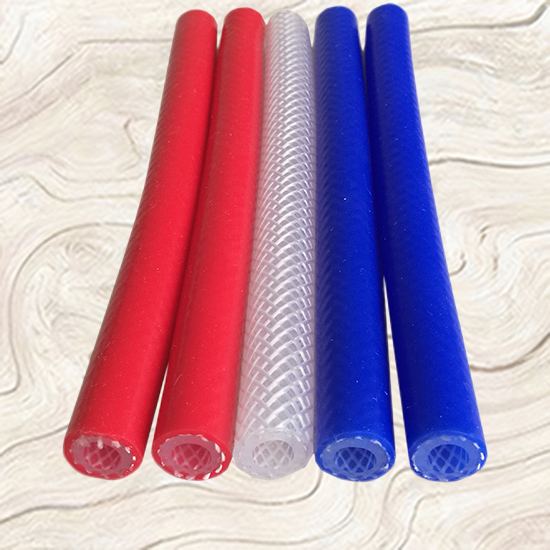
Reinforced silicone hose for industrial applications
Evaluate Temperature Resistance and Fire Safety Separately
High-temperature resistance and flame resistance are different performance requirements. A hose may tolerate elevated operating temperatures without meeting the fire-safety requirements of an industrial installation.
When selecting a high-temperature silicone hose, consider both continuous operating temperature and short-term temperature peaks. External radiant heat, nearby equipment, and thermal cycling can also influence the hose's service life.
For applications where flame performance is required, evaluate the relevant product-specific test reports and certification requirements. RAINBOW offers UL-listed flame-resistant silicone hoses for applications including fuel cell power systems, electronic enclosures, and telecommunications infrastructure.
The required flame classification should be confirmed against the equipment specification and applicable safety requirements. Do not assume that a flame-resistant material automatically qualifies the complete hose assembly for every fire-safety application.
Consider Installation Geometry and Connection Design
A hose must fit the equipment correctly while allowing for the movement and clearance required during operation. Poor routing, excessive bending, and unsuitable connections can create mechanical stress even when the selected material is appropriate.
For equipment with restricted installation space, complex routing, or non-standard connection positions, a custom silicone hose may provide a more suitable solution than a standard straight hose.
RAINBOW provides custom silicone hose manufacturing based on application requirements. Buyers can provide engineering drawings or physical samples for technical evaluation.
The following details should be confirmed during the design review:
- Inside diameter, outside diameter, and overall length.
- Bend angles, centerline dimensions, and connection positions.
- Required insertion depth and clamp compatibility.
- Clearance from adjacent components and moving equipment.
- Expected vibration, movement, and installation tolerances.
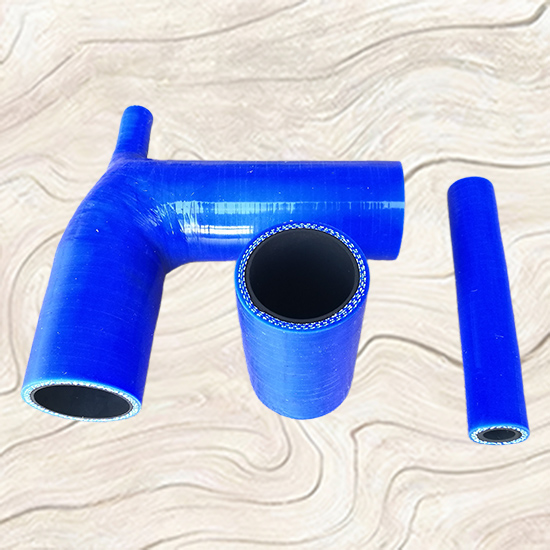
Silicone hose construction and connection design
For new designs, sample approval should include dimensional inspection and a fit check in the actual installation environment. This helps identify design problems before production quantities are approved.
Compare Hose Requirements by Industrial Application
Different industrial applications place different demands on silicone hose construction. The following comparison provides a practical starting point for identifying the specifications that require attention.
| Application | Key Selection Factors | What to Verify |
|---|---|---|
| Industrial air transfer | Temperature, airflow, pressure | Working pressure and flow requirements |
| Chemical processing | Chemical compatibility, temperature | Compatibility with the exact chemical and concentration |
| Fuel and oil systems | Fluid resistance, permeation | Inner lining and application-specific compatibility |
| High-temperature equipment | Continuous heat, thermal cycling | Operating temperature limits and heat exposure |
| Equipment with vibration | Flexibility, reinforcement, connections | Movement allowance and connection stability |
This comparison is intended for preliminary selection. Final hose specifications should be based on the actual equipment design, operating conditions, and applicable technical requirements.
Prepare a Complete Technical Specification Before Ordering
A complete technical specification helps manufacturers evaluate the design accurately and reduces the risk of receiving a hose that meets the nominal dimensions but fails to perform as expected.
When requesting a quotation for a special use silicone hose, prepare the following information:
- Engineering drawing or reference sample.
- Required dimensions, tolerances, and connection details.
- Transported medium and chemical compatibility requirements.
- Continuous and peak operating temperatures.
- Working pressure, pressure fluctuations, and vacuum requirements.
- Reinforcement preferences and mechanical loading conditions.
- Required standards, test reports, and inspection criteria.
- Estimated order quantity and production schedule.
For custom projects, confirm the material construction, dimensional tolerances, testing requirements, and sample approval criteria before placing a production order. This creates a clear basis for comparing quotations and evaluating supplier performance.
Frequently Asked Questions
What is a special use silicone hose?
A special use silicone hose is designed for applications requiring specific performance characteristics, such as additional temperature resistance, specialized inner linings, reinforcement, or custom geometry. The appropriate construction depends on the operating environment and technical requirements.
Can silicone hoses be used for oil and fuel applications?
Conventional silicone hoses are not automatically suitable for continuous exposure to petroleum fuels or oils. A specialized material or inner lining may be required. Always confirm compatibility with the exact fluid and operating conditions.
Does reinforcement increase the pressure rating of a silicone hose?
Reinforcement can help control hose deformation under pressure, but the final pressure rating depends on the complete hose construction. Working pressure, temperature, diameter, and reinforcement arrangement must all be considered.
What information is needed for a custom silicone hose quotation?
Provide a drawing or sample, dimensions, transported medium, operating temperature, working pressure, reinforcement requirements, connection details, and estimated quantity. Relevant testing and quality requirements should also be specified.
How can engineers reduce the risk of premature hose failure?
Start with a complete assessment of operating conditions, confirm material compatibility and pressure requirements, verify installation geometry, and approve a sample before production. Routine inspection and maintenance should follow the equipment manufacturer's requirements.
Select a Silicone Hose Based on Real Operating Requirements
The right special use silicone hose is the one that meets the combined requirements of the application rather than simply offering the highest temperature rating or the most complex reinforcement.
By evaluating operating conditions, material compatibility, mechanical loads, and installation geometry together, industrial equipment manufacturers can make more informed purchasing decisions and reduce avoidable design and maintenance problems.
RAINBOW Manufacturing offers a range of specialized silicone hose constructions, including reinforced, flame-resistant, and fluororubber-lined options. For projects requiring a custom configuration, provide the operating conditions and engineering drawings for technical evaluation.