Choosing a hose for chemical transfer is not simply a matter of matching its temperature rating to the operating environment. A hose may remain flexible at high temperatures yet deteriorate when exposed to an incompatible fluid. For engineers and purchasing teams, the real challenge is determining whether the material can withstand the chemical, concentration, and exposure conditions throughout its intended service life.
Understanding how to evaluate compatibility data, recognize material limitations, and identify potential failure risks can help prevent unsuitable specifications before production begins.
Key Takeaways
- Chemical compatibility depends on the medium, concentration, temperature, and exposure duration.
- Standard silicone is not suitable for every fuel, solvent, acid, or alkali.
- Compatibility charts provide screening information, not universal guarantees.
- Material selection should account for both chemical exposure and mechanical operating conditions.
What Is a Chemical Resistant Silicone Hose?
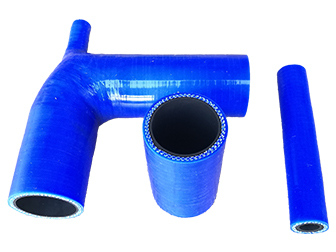
A chemical resistant silicone hose is designed for applications where the hose material must withstand contact with specified chemical media. Its suitability depends on the properties of the materials used and the conditions under which the hose operates.
The term does not identify a single material formulation or guarantee resistance to every chemical. Two hoses described as chemical resistant may perform differently when exposed to the same fluid because their compounds, inner surfaces, and construction differ.
For buyers, the important question is therefore not whether a hose carries this label, but whether its material has demonstrated compatibility with the intended medium.
Is Silicone Chemical Resistant?
Silicone rubber offers useful resistance to various environmental conditions and selected chemicals, but its compatibility has limits.
Some aqueous solutions may be compatible with a particular silicone compound, while certain hydrocarbon fuels and organic solvents can cause swelling, changes in hardness, or deterioration. Strong acids and alkalis also require individual assessment rather than assumptions based on their chemical category.
Several factors influence the outcome:
- Chemical composition: Different substances can interact with the same elastomer in different ways.
- Concentration: A diluted solution and a concentrated formulation may produce different results.
- Temperature: Higher temperatures can change the rate of chemical interaction.
- Exposure duration: Short-term contact does not necessarily predict long-term performance.
Chemical exposure may also affect properties beyond visible appearance. Changes in tensile strength, elongation, or dimensional stability can compromise a hose even when surface damage is not obvious.
When standard silicone does not meet the required compatibility criteria, the material at the fluid-contact surface may need to be reconsidered. Rainbow offers FKM-lined silicone hoses and FVMQ-lined silicone hoses for applications requiring specific media resistance. FKM-lined constructions are positioned for demanding applications involving fuels, oils, and certain chemicals. FVMQ-lined constructions may also be considered where the properties of fluorosilicone are appropriate.
For coolant applications, Rainbow also offers OAT silicone hose options. Compatibility should be assessed against the actual coolant formulation and operating conditions rather than assumed from the product name alone. Each option serves a different material requirement and should be evaluated for the intended application.
How to Use a Silicone Hose Chemical Resistance Chart
A silicone hose chemical resistance chart helps engineers compare potential materials before committing to a specification. However, its usefulness depends on the quality and relevance of the underlying data.
Rather than selecting a material from a rating alone, examine what the rating actually represents.
| What to Check | Why It Matters |
| Chemical identity | Similar chemical names do not necessarily indicate equivalent compatibility. |
| Concentration | Results may differ between diluted and concentrated solutions. |
| Test temperature | A rating established at room temperature may not apply at elevated temperatures. |
| Exposure duration | Short-term observations may not predict prolonged contact. |
| Material grade | Data for one elastomer formulation may not apply to another. |
| Test method | Different procedures may evaluate different forms of material degradation. |
Pay particular attention to the chart's rating definitions. A favorable rating generally applies only within the stated test conditions and does not automatically establish suitability for a complete hose assembly.
Missing data also requires caution. If a chemical is absent from a chart, that absence does not demonstrate either compatibility or incompatibility. It means the available chart does not establish the answer.
For demanding applications, use published data to narrow the available options, then seek material-specific evidence or arrange appropriate testing. The evaluation should reflect the actual fluid composition and expected service conditions.
What Can Cause a Chemical Resistant Hose to Fail?
Chemical incompatibility is not always immediately visible. Several failure mechanisms are worth considering during material evaluation.
- Swelling and dimensional changes: Absorption of a fluid can increase the material's volume, potentially affecting fit, sealing, or mechanical performance.
- Hardening or softening: Chemical exposure may alter the elastomer's flexibility and physical properties. Either change can affect its ability to withstand movement and pressure.
- Permeation: Certain substances can migrate through an elastomer even when obvious surface damage is absent. This may matter where fluid containment or contamination control is important.
- Loss of mechanical strength: Prolonged exposure can affect properties such as tensile strength and elongation, potentially reducing resistance to operational stress.
These mechanisms should not be treated as inevitable outcomes for every chemical. Their likelihood depends on the particular material and exposure conditions. They are useful considerations when deciding what compatibility evidence is needed before a hose enters service.
Standard Silicone vs. Lined Silicone Hose
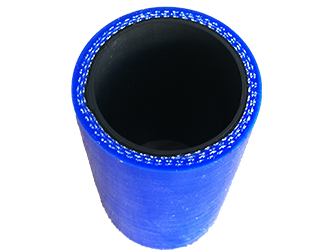
The main difference between standard and lined silicone hoses is the material that contacts the conveyed fluid. In a standard construction, the fluid contacts the silicone inner surface. A lined design uses a different elastomer at the fluid-contact surface when specific chemical resistance is required.
Rainbow's FKM-lined and FVMQ-lined silicone hoses offer alternative inner-surface materials for applications with specific media requirements. OAT silicone hose options address coolant-related requirements. These products should not be treated as interchangeable, since their suitability depends on the fluid and operating conditions.
A specialized lining does not guarantee compatibility with every chemical. Material selection should therefore be based on relevant compatibility data rather than the hose structure or product name alone.
What Should Buyers Confirm Before Specifying a Chemical Resistant Hose?
Before selecting a hose for chemical service, purchasing teams and engineers should establish the application's requirements clearly.
1. Medium and composition
Identify the exact chemical, its concentration, and any additives or mixed ingredients. A broad description such as “cleaning fluid” may not provide enough information for a reliable compatibility assessment.
2. Operating conditions
Confirm the normal and peak temperatures, working pressure, and expected exposure duration. These conditions can influence both chemical compatibility and overall hose performance.
3. Mechanical requirements
Consider the required dimensions, bend radius, movement, vibration, and pressure or vacuum demands. A material that is chemically compatible may still be unsuitable if the hose cannot meet the mechanical requirements.
4. Compatibility evidence
Check whether the available data applies to the proposed material grade and the actual operating conditions. Generic ratings may not represent the performance of a specific formulation or finished hose assembly.
5. Validation needs
If relevant data is limited or the consequences of failure are significant, determine whether material testing or application-specific validation is necessary before finalizing the specification.
These details create a more reliable basis for comparing materials and help prevent a specification from relying on a generic product description.
For applications involving specific chemical or coolant requirements, Rainbow offers FKM-lined silicone hoses, FVMQ-lined silicone hoses, and OAT silicone hose options for consideration. Share the medium's composition, operating conditions, and dimensional requirements to help assess which option may be appropriate for your application.
FAQ
Can a chemical resistant silicone hose be used with a chemical mixture?
Not automatically. Mixtures can behave differently from their individual ingredients, so compatibility should be evaluated for the complete formulation under the intended operating conditions.
How often should chemical compatibility be reassessed?
Reassessment is advisable when the chemical formulation, concentration, operating temperature, or service conditions change. Inspection and replacement intervals should also follow the application's risk level and relevant maintenance requirements.