Choosing the right PVC foam board extrusion line is essential for manufacturers who need consistent board thickness, a uniform cellular structure, a smooth surface, and reliable production efficiency. The best machine is not necessarily the one with the highest advertised output. It is the one that matches your board specifications, PVC formulation, target production capacity, and downstream processing requirements.
For industrial production, buyers should evaluate the extrusion system, screw configuration, die design, calibration and cooling system, cutting equipment, automation, and long-term operating costs together. SKY WIN Technology provides plastic extrusion equipment and production solutions for manufacturers working with PVC, WPC, and other plastic products.
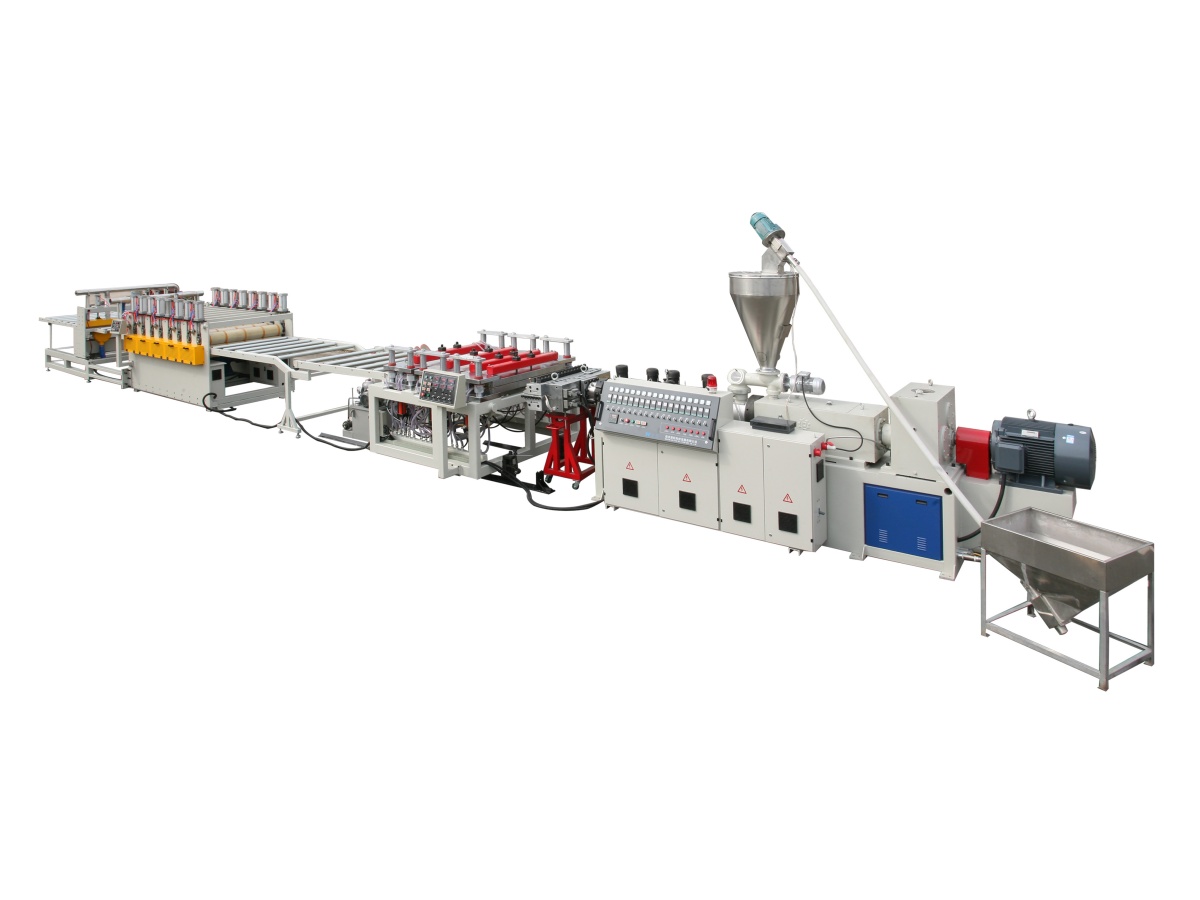
What Is a PVC Foam Board Extrusion Line?
A PVC foam board extrusion line is an integrated manufacturing system designed to convert a prepared PVC compound into continuous foamed sheets or boards. Depending on the product design, the system may include raw material mixing and feeding equipment, an extruder, a sheet die, a calibration unit, a cooling section, a haul-off unit, a cutting system, and a board stacking station.
During production, the PVC compound is plasticized and shaped through the die. The foaming system creates a cellular structure, while calibration and cooling help the board achieve its required thickness, width, flatness, and surface finish. The exact equipment configuration depends on the foaming process, board structure, formulation, and finished product specifications.
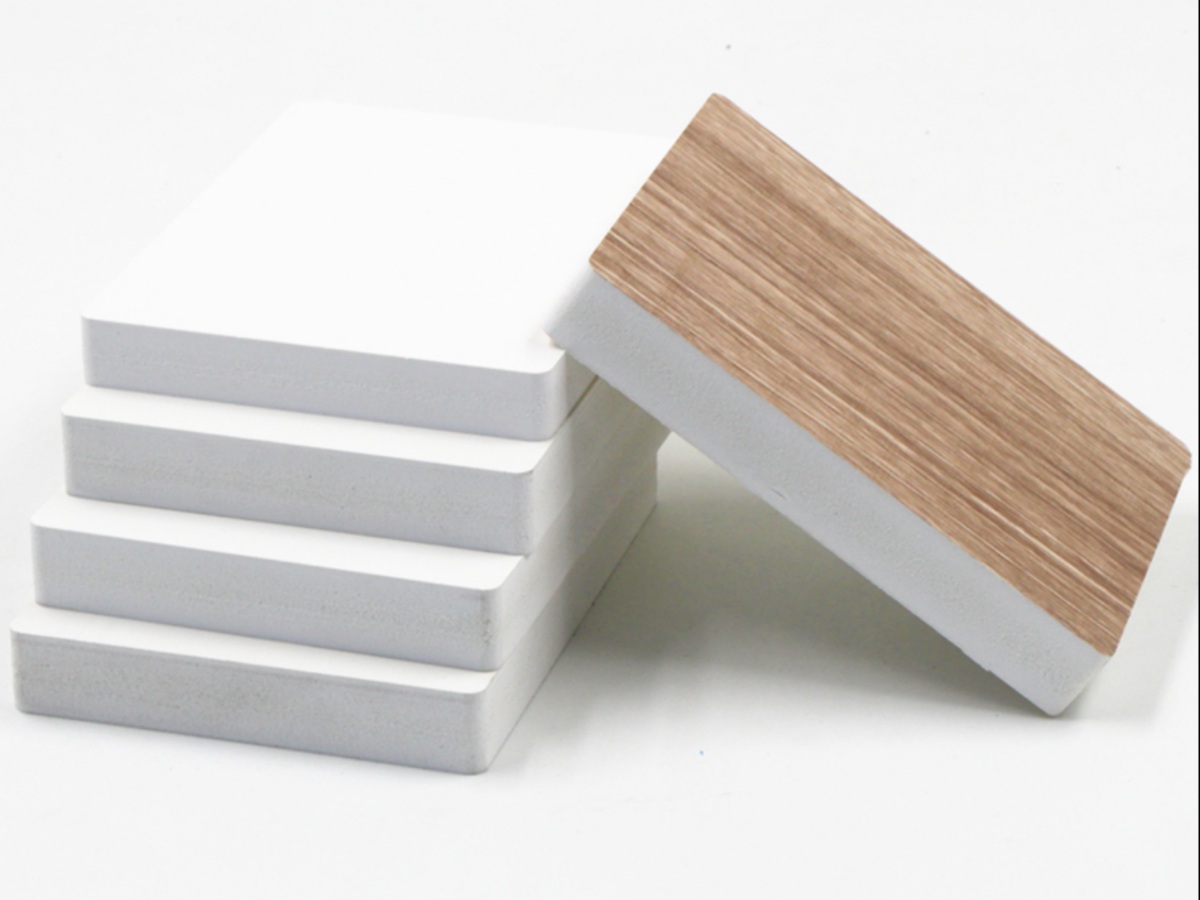
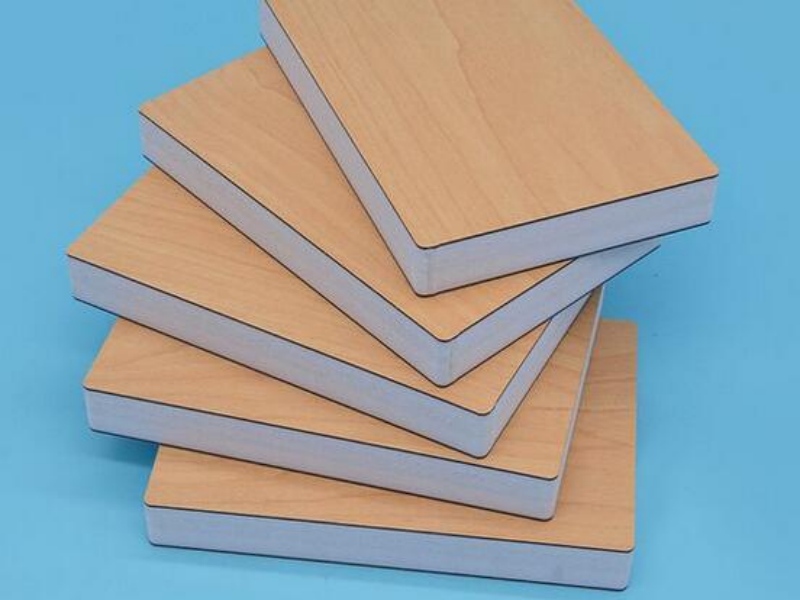
PVC foam boards are commonly used for advertising panels, furniture boards, cabinet components, interior decoration, and other applications requiring lightweight sheet materials. Different applications may require different densities, surface properties, mechanical strength, and machining performance.
Manufacturers should define the intended finished product before comparing machine models. This helps prevent the common mistake of purchasing a line that can process PVC material but cannot consistently meet the required foam board quality.
Start With Board Thickness, Width, Density, and Application
The first step in selecting a PVC foam board production line is to establish the product specifications. These requirements determine the extrusion capacity, die dimensions, calibration system, cooling length, and cutting configuration.
Before requesting a quotation, prepare the following information:
- Board thickness: Identify the minimum, maximum, and most frequently produced thicknesses.
- Board width and length: Confirm the standard dimensions and whether multiple sizes will be produced on the same line.
- Target density: Specify the required density range and whether the product is a lightweight foamed board or a higher-density structural board.
- Surface requirements: Describe the required smoothness, color, gloss, lamination, or other finishing operations.
- End-use requirements: Explain whether the board will be cut, drilled, routed, laminated, printed, or used as a furniture or advertising panel.
- Production target: Estimate the required output in kilograms per hour or finished boards per shift.
For example, a factory manufacturing lightweight advertising boards may prioritize low density, a uniform surface, and easy cutting. A manufacturer producing cabinet or furniture boards may place greater emphasis on rigidity, screw-holding performance, surface finishing, and dimensional stability.
These requirements should be discussed with the equipment supplier before the extrusion line is configured.
Choose an Extruder That Matches the PVC Formulation
The extruder is one of the most important components of a PVC foam board extrusion line. Its job is to mix and plasticize the compound consistently while maintaining stable material flow and suitable processing conditions.
PVC foam board formulations may contain PVC resin, processing aids, stabilizers, lubricants, fillers, and a foaming system. The proportions and characteristics of these ingredients influence melt behavior, foam formation, density, surface quality, and final mechanical properties.
When comparing extruders, buyers should check the following factors:
- Screw configuration: Confirm that the screw design is suitable for the intended PVC formulation and foaming process.
- Plasticizing and mixing performance: The system should process the compound consistently without excessive heat buildup or unstable material flow.
- Temperature control: Heating and cooling zones should support stable processing across the required operating range.
- Drive and control system: Check whether the motor, drive, and controls can support the planned operating conditions.
- Wear resistance: Review screw and barrel materials in relation to the formulation, particularly when mineral fillers are used.
A conical twin-screw extruder is commonly used for processing rigid PVC compounds because it can provide effective mixing and plasticization. However, buyers should not assume that every conical twin-screw configuration is suitable for every foam board formula. Screw geometry, output range, and the foaming process must be evaluated together.
When comparing equipment for composite board manufacturing, the WPC (PVC+Wood) Furniture Board Extrusion Line is a relevant reference for PVC-and-wood composite applications. Because wood-plastic composite boards and PVC foam boards have different material characteristics, buyers should confirm that the selected equipment is designed for their specific product.
Evaluate the Die, Calibration, and Cooling System
A suitable extruder alone cannot guarantee a consistent finished board. The die, calibration section, and cooling system also have a major influence on dimensional accuracy and production stability.
The sheet die distributes the molten PVC compound across the required board width. Uneven flow, unsuitable die settings, or inconsistent temperature conditions may contribute to thickness variation, surface defects, and unstable board formation.
The calibration system helps establish the board dimensions and surface shape. The cooling section then removes heat so that the board can maintain its shape during downstream handling.
When reviewing these components, ask the supplier:
- Can the die accommodate the required board width and thickness range?
- How is the die gap adjusted and maintained?
- What calibration method is used for the intended foam board structure?
- Is the cooling capacity sufficient for the planned output and board thickness?
- How are board flatness, edge quality, and thickness consistency checked during production?
These questions are especially important for wide boards and high-volume manufacturing. A line that runs at a high speed but produces excessive rejected material may have a higher actual production cost than a properly configured line running at a more stable rate.
For manufacturers working with decorative PVC sheets, the PVC Imitation Marble Sheet Extrusion Line provides a reference for a different type of PVC sheet application. Its configuration should be evaluated according to decorative sheet requirements rather than assumed to be interchangeable with a foam board line.
Match Production Capacity to Real Factory Demand
Output capacity should be evaluated against the board specifications and the actual production plan, rather than the maximum number shown in a machine brochure.
Three capacity figures are worth distinguishing:
- Rated output: The supplier's stated capacity under defined operating conditions.
- Stable production output: The output achievable while meeting the required density, thickness, surface quality, and dimensional tolerances.
- Saleable output: The quantity of finished boards that pass the factory's quality checks after accounting for startup losses, rejected boards, and downtime.
For industrial production, stable and saleable output is often more useful than maximum theoretical capacity. A line with a high rated output may not deliver the expected result if the cooling section, calibration equipment, or downstream cutting system becomes a bottleneck.
Ask the supplier to confirm expected output using your actual formulation and target board specifications. Where possible, request a production trial or acceptance test with agreed quality criteria.
It is also useful to calculate the expected cost per kilogram or per saleable board. Include electricity, labor, raw materials, maintenance, tooling, startup waste, and the cost of rejected products. This gives the purchasing team a more realistic basis for comparing different configurations.
Check Automation, Cutting, and Downstream Equipment
A complete PVC foam board production system should be designed around the entire manufacturing process, not just the extrusion stage.
Depending on the production requirements, the line may need automatic feeding, mixing, synchronized haul-off, automatic cutting, board stacking, and optional surface treatment or lamination equipment. Each additional unit should solve a specific production need rather than simply increase the machine's complexity.
For example, automatic cutting can help maintain consistent board lengths and reduce repetitive manual handling. A synchronized haul-off system can support stable movement through the line. Appropriate stacking equipment can improve handling efficiency and help protect finished board surfaces.
Factories planning to produce several board sizes should also confirm the changeover procedure. Ask how long it takes to change the die, adjust calibration settings, modify cutting lengths, and return to stable production.
Compare Energy Consumption and Operating Costs
The purchase price is only one part of the total cost of owning a PVC foam board extrusion line. Energy consumption, staffing, maintenance, tooling, spare parts, material waste, and production downtime all influence the long-term return on investment.
When comparing suppliers, ask for the installed power, expected operating power under your production conditions, heating and cooling requirements, and recommended maintenance schedule. Installed power should not be confused with actual electricity consumption during normal production.
It is also important to understand how frequently the screw, barrel, die, calibration components, and other wear parts may need inspection or replacement under the intended operating conditions.
A practical comparison should consider the total cost of producing a saleable board, not just the initial machinery investment. Lower energy use or reduced scrap may improve operating economics, but these benefits should be supported by clear operating assumptions or production data.
Verify the Manufacturer's Engineering and After-Sales Support
Industrial extrusion equipment is a long-term investment. The supplier's engineering capabilities, commissioning process, spare parts availability, and technical support can directly affect how quickly a factory reaches stable production.
Before placing an order, confirm whether the manufacturer can provide:
- A configuration based on your board dimensions, formulation, and target output.
- Equipment drawings, installation requirements, and utility specifications.
- Operating instructions, maintenance guidance, and operator training.
- A recommended spare parts list and a clear process for obtaining replacements.
- Commissioning support and a defined procedure for verifying production performance.
Manufacturers exploring related PVC processing equipment can review the PVC Wall, Door and Frame, Cabinet Extruders category. This provides a reference for related PVC profile and cabinet extrusion applications, but the specific configuration required for foam board production should still be confirmed with the engineering team.
A Practical Checklist Before Requesting a Quotation
To help the equipment supplier recommend a suitable PVC foam board extrusion line, prepare a concise technical brief before requesting a quotation.
| Information to provide | What the supplier needs to confirm |
|---|---|
| Board material and formulation | Extruder type, screw design, and processing suitability |
| Board width and thickness | Die size, calibration method, and cooling capacity |
| Target density and surface finish | Foaming process, process controls, and quality verification |
| Required output | Rated capacity and expected stable production output |
| Factory space and utilities | Line layout, installed power, cooling water, and installation requirements |
| Finishing and packaging requirements | Cutting, stacking, lamination, and other downstream units |
| Service expectations | Installation, training, spare parts, and technical support |
The more complete the technical brief, the easier it is to compare quotations on a like-for-like basis. It also reduces the risk of choosing a machine based on an attractive headline price while overlooking equipment that is essential to the actual production process.
How to Select the Right PVC Foam Board Extrusion Line
The right PVC foam board extrusion line is the one that meets the manufacturer's product requirements while supporting stable, economical production. Board specifications, formulation, extrusion performance, die design, cooling capacity, automation, and after-sales support should all be considered before making a purchasing decision.
Rather than choosing equipment based only on the advertised output or purchase price, compare the expected saleable output, finished board quality, energy requirements, maintenance needs, and production flexibility.
Before finalizing a machine configuration, provide the supplier with your target board dimensions, density, application, expected production volume, and factory conditions. These details make it easier to determine whether a standard configuration is suitable or whether a customized solution is needed.
Frequently Asked Questions About PVC Foam Board Extrusion Lines
What is the most important factor when choosing a PVC foam board extrusion line?
The most important factor is matching the complete line configuration to the required board specifications and PVC formulation. Extruder design, die dimensions, foaming conditions, calibration, cooling, and downstream equipment must work together to achieve stable quality.
Which extruder is suitable for PVC foam board production?
The appropriate extruder depends on the PVC compound, foaming process, required output, and board structure. A conical twin-screw extruder is commonly used for rigid PVC processing, but the specific screw design and operating conditions must be verified for the intended foam board application.
How do I determine the required output capacity?
Estimate the required saleable production per shift or per day, then account for operating hours, startup losses, maintenance, and rejected boards. Ask the supplier to confirm the expected output using your target board dimensions, density, and formulation.
Why are calibration and cooling important for PVC foam boards?
Calibration helps control board dimensions and surface shape, while cooling helps the board maintain its shape after extrusion. Inadequate calibration or cooling can contribute to thickness variation, warping, or unstable production.
Can one extrusion line produce different board thicknesses?
Potentially, yes. The available thickness range depends on the extruder, die, calibration equipment, foaming process, and product requirements. Confirm the supported range and the changeover procedure with the manufacturer before purchasing.
What information should I send when requesting a quotation?
Provide the material formulation, board width and thickness, target density, surface finish, expected output, factory utility conditions, and downstream processing requirements. These details help the supplier recommend a suitable configuration and clarify the expected production performance.