An air intake hose that matches the connection diameter may still be unsuitable for the intended engine layout. Incorrect bend geometry, limited installation clearance, or incompatible materials can create fitment problems and premature deterioration. For OEM purchasing teams and automotive engineers, selecting a suitable silicone air intake hose requires more than checking its end diameters.
This guide explains where these hoses are used, how OEM and performance project requirements differ, and which material and design factors to evaluate before choosing a standard or custom component.
Key Takeaways
- Identify the hose’s position in the intake system before selecting its geometry, material, or reinforcement.
- OEM and performance applications share requirements for fit, sealing, and durability, but their design and sourcing priorities may differ.
- A temperature specification does not establish pressure resistance, vacuum performance, or compatibility with oil and fuel.
What Is a Silicone Air Intake Hose?
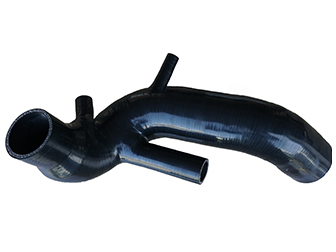
A silicone air intake hose is a flexible connection that carries incoming air through an engine’s air induction system. Its position depends on the engine design.
In a naturally aspirated engine, the hose commonly connects the air filter housing to the throttle body or another section of the intake ducting. In a turbocharged engine, it may connect the air filter assembly to the turbocharger compressor inlet.
The distinction between the compressor inlet and outlet is important. The inlet hose carries air toward the turbocharger, while the outlet piping carries compressed air toward the charge air cooler or intercooler. These components operate under different conditions and should not automatically be treated as interchangeable.
Before comparing products, identify the connection points and establish whether the hose will operate on the intake side or the pressurized charge-air side of the system.
Silicone Air Intake Hoses in OEM Vehicles
For OEM vehicle programs, the hose must match the designated connection points, follow the available routing path, and maintain clearance from surrounding engine hardware.
For example, the air filter outlet and engine inlet may be offset rather than aligned. A straight section may not provide the required connection, making a shaped hose or reducer more appropriate. The design depends on the connection diameters, the distance between components, and their relative positions.
The specification should also identify any required branch connections, fittings, or attachment features. Matching the main hose diameter is not enough if the replacement omits a connection used by the original intake assembly.
Operating Conditions and Validation
Under-hood temperature, vibration, component movement, and possible exposure to oil mist influence material and construction choices. Any vacuum conditions should also be included in the specification.
These requirements need to be translated into agreed acceptance criteria. Dimensional inspection verifies geometry, while separate testing evaluates the required operating performance.
Production Consistency
For purchasing teams, consistency across production batches is as important as initial sample fitment.
A clear drawing should define the critical diameters, lengths, bend orientation, connection positions, and tolerances. This gives both the manufacturer and the buyer a consistent basis for inspection.
A hose that fits one prototype but varies significantly in subsequent batches can create assembly delays and additional inspection work. Sample approval and production acceptance should therefore refer to the same controlled specification.
Silicone Air Intake Hoses in Performance Vehicles
OEM and performance applications share basic requirements for fit, sealing, material compatibility, and structural stability. The difference often lies in whether the hose must match an established production design or accommodate a modified intake layout.
Changes to the air filter position, turbocharger location, or surrounding components may require different hose lengths, diameters, and connection angles. A correctly shaped silicone hose can connect these components without relying on excessive stretching, twisting, or forced installation.
Custom Routing and Vacuum Resistance
A custom bend or reducer may help resolve an offset connection or restricted installation space. However, the hose must retain a suitable shape under the intended operating conditions.
Where suction could cause deformation, the buyer should specify the expected vacuum conditions and request relevant validation for the proposed construction. Hose diameter, unsupported length, wall construction, bend geometry, and installation arrangement should be considered together.
A description such as “reinforced” does not, by itself, establish a vacuum rating.
Does a Silicone Intake Hose Increase Engine Power?
Silicone construction alone should not be presented as evidence of increased engine power.
A hose may solve a routing, fitment, or durability requirement without producing a measurable power gain. Any claimed improvement in airflow or engine performance should be supported by testing of the specific intake configuration.
For a modified vehicle, the first question is whether the proposed hose suits the system, not whether silicone is automatically a performance upgrade.
Silicone Air Intake Hose Benefits and Material Considerations
The main benefits of silicone intake hoses include temperature resistance, flexibility, and a range of construction options. Their suitability still depends on the selected compound, reinforcement, and application.
Temperature Resistance and Flexibility
Rainbow lists a temperature range of −54 °C to +220 °C for its reinforced intake hose. Before using that range as a design limit, confirm the applicable construction and whether the limits refer to continuous service or short-term exposure.
The temperature at the installation point matters more than a general description of the engine compartment. Nearby heat sources, exposure duration, and operating conditions should be considered when reviewing the specification.
Reinforcement and Geometry
Reinforcement contributes to the hose’s structural characteristics, while geometry determines how it fits into the intake assembly.
The drawing should identify:
- Inside diameter at each connection.
- Wall thickness or outside diameter, as required.
- Straight-section lengths.
- Bend radius and orientation.
- Connection positions.
- Any branches, fittings, or other required features.
Reinforcement alone does not guarantee pressure or vacuum capability. Relevant specifications or test results should apply to the proposed hose construction, rather than to an unrelated product.
Oil and Fuel Compatibility
Standard silicone intake hoses should not automatically be selected for fuel plumbing or continuous contact with petroleum-based oils.
Brief incidental contact and prolonged exposure are different conditions. Suitability for one should not be assumed to establish suitability for the other.
Where oil mist may contact the inner surface, a fluorosilicone lining or another compatible construction may be considered. The choice should be based on the actual fluid, temperature, and extent of exposure.
Air Intake Hose Leak Symptoms and Inspection
A damaged hose or poorly secured connection can allow unwanted air to enter the intake system. Its effect depends on the leak location and engine design.
Possible symptoms and inspection findings include:
- Hissing or unusual noise around connections.
- Visible cracks, splits, or deformation.
- Loose clamps or gaps at joints.
- Rough idling or irregular engine response.
In systems using a mass airflow sensor, a leak downstream of the sensor can admit unmetered air and disturb fuel control. This is why leak location matters when assessing symptoms such as rough idle.
These signs do not confirm a hose leak by themselves. Inspection should also cover adjacent pipes, clamps, sensors, and other intake components.
How to Clean a Silicone Air Intake Hose
Allow the engine and surrounding components to cool before handling the hose. Remove it according to the vehicle manufacturer’s service procedure.
Use a cleaning solution confirmed to be compatible with the hose material and a soft cloth to remove surface residue. Avoid aggressive solvents or petroleum-based cleaners unless their compatibility has been established.
After cleaning, allow the hose to dry completely. Inspect the inner and outer surfaces for cracks, deformation, and other signs of deterioration before reinstalling it.
Cleaning can remove deposits, but it cannot restore damaged material. A deteriorated hose should be assessed for replacement rather than treated as serviceable simply because it has been cleaned.
Choosing a Standard or Custom Intake Hose
A standard hose may be suitable when its dimensions, geometry, construction, and verified operating capabilities match the application.
Custom manufacturing becomes useful when a standard component cannot meet the required routing, connection sizes, branch arrangement, or installation clearances. It may also be necessary when a project requires a specific reinforcement, lining, or identification scheme.
Custom does not automatically mean better. The purpose is to meet requirements that an available standard product cannot adequately satisfy.
If the construction has not yet been selected, provide the operating requirements rather than guessing the material or reinforcement specification.
Custom Silicone Intake Hose from Rainbow
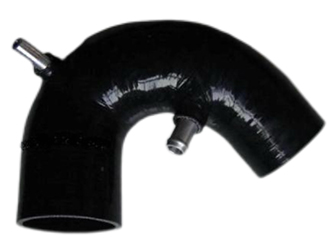
Rainbow offers custom silicone intake hoses based on engineering drawings or prototype samples, including complex-shaped configurations. Its listed options include reinforced construction, customized colors, and compatible clamps.
The product states a minimum order quantity of 10 pieces and a lead time of 4–8 weeks. These details provide a starting point for sourcing discussions; the applicable quantity, specification, and delivery schedule should be confirmed for each project.
Buyers can review the Custom Silicone Intake Hose page for product details and available manufacturing options.
For sample approval, keep dimensional conformity, assembly fitment, and operating performance separate. Record the approved drawing revision, inspection results, relevant test results, and any agreed deviations before moving into production.
Frequently Asked Questions
What should be checked when installing a silicone air intake hose on a turbocharged engine?
Confirm that the hose is intended for the turbocharger inlet rather than the pressurized outlet side. Check the connection diameters, orientation, branch connections, and clearance from nearby components.
Fit the hose without twisting, stretching, or forcing it into position. Position and tighten the clamps according to the applicable installation requirements, then inspect the assembly for gaps, interference, and leakage. Follow the vehicle manufacturer’s service instructions where applicable.
How often should a silicone air intake hose be inspected?
There is no universal interval for every vehicle. Follow the vehicle manufacturer’s maintenance recommendations and inspect the hose during intake system servicing or when relevant symptoms appear.
Check for cracks, deformation, loose clamps, contact damage, and signs of material deterioration.
Can a silicone air intake hose replace a factory rubber intake hose?
It may be suitable, but replacement should not be based on material alone.
The replacement must match the required geometry, connections, installation space, and operating conditions. Any original branch connections or attachment features must also be addressed. A custom configuration may be necessary where a standard hose cannot reproduce the required arrangement.
Is a silicone air intake hose suitable for continuous oil exposure?
Standard silicone intake hoses should not be assumed suitable for continuous contact with petroleum-based oils or fuel.
Where oil mist or other fluid exposure is expected, confirm the compatibility of the proposed compound or lining under the actual operating conditions.