Surface defects in SPC flooring extrusion can appear as bubbles, black spots, scratches, rough patches, pinholes, uneven gloss, or wavy sheet surfaces. These defects may originate from raw material preparation, extrusion temperature, melt flow, die condition, calendering, cooling, or online lamination. Identifying the stage where a defect first appears is the most effective way to find its cause.
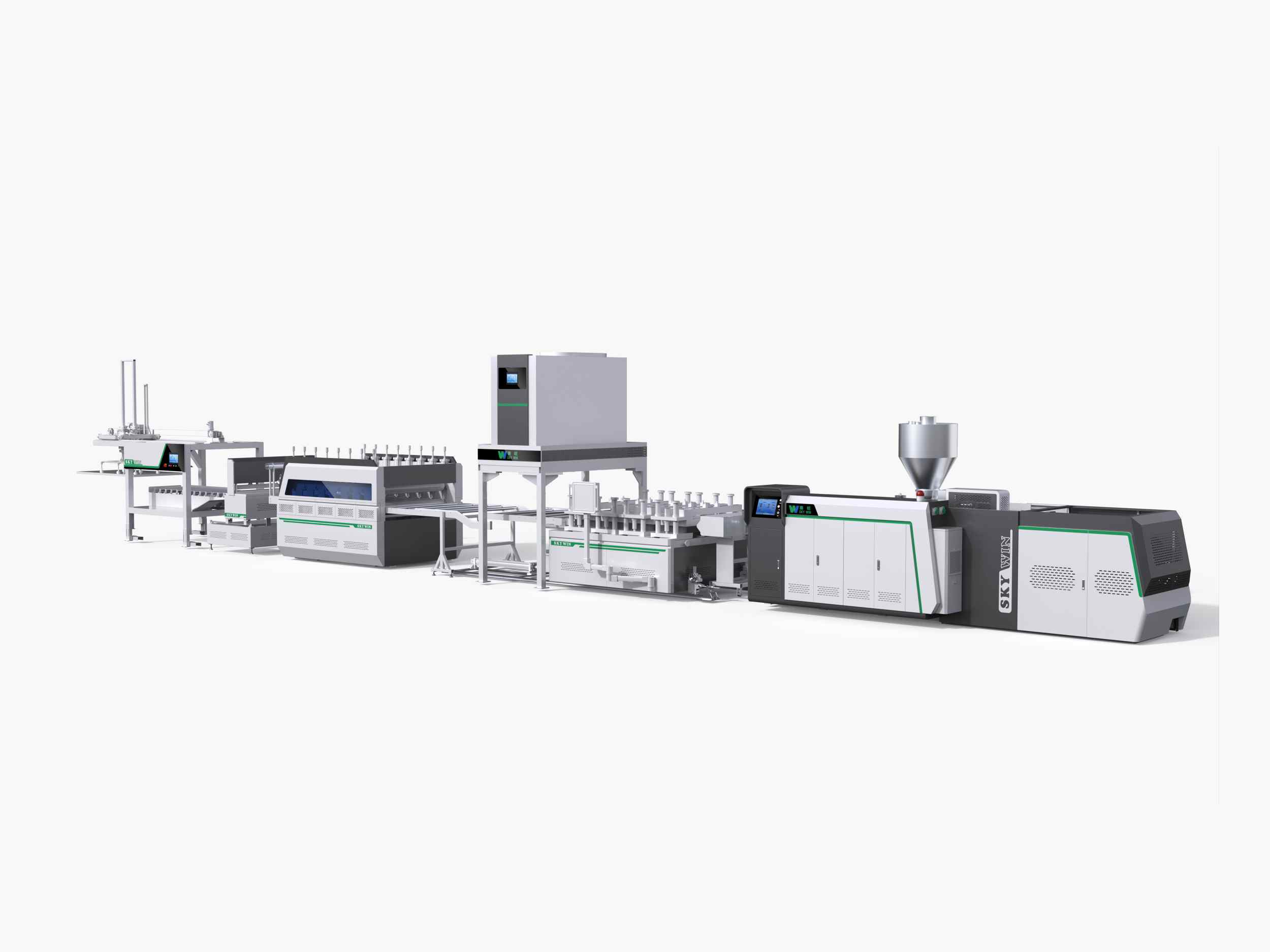
For SPC flooring manufacturers, surface quality depends on more than the extruder itself. The material formulation, twin-screw plasticization, die flow, roller condition, and cooling process must work together to produce a smooth and consistent sheet. SKY WIN's SPC flooring extrusion equipment integrates extrusion, sheet forming, cooling, and downstream processing to support stable manufacturing.
What Causes Surface Defects in SPC Flooring Extrusion?
The main causes of surface defects in SPC flooring extrusion are inconsistent raw materials, poor plasticization, unsuitable processing temperatures, unstable melt flow, contamination, damaged or dirty rollers, uneven cooling, and incorrect lamination settings.
Different defects often point to different processing problems. Bubbles may indicate trapped air, moisture, or material degradation. Black spots may result from contaminated material or degraded PVC deposits. Scratches are more likely to be associated with foreign particles or damaged contact surfaces, while uneven gloss and wavy surfaces may indicate inconsistent forming or cooling conditions.
Before changing machine settings, manufacturers should determine whether the defect appears before or after the sheet passes through the die, calendering section, cooling system, or lamination unit. This helps avoid unnecessary adjustments that may introduce additional production problems.
| Surface defect | Possible causes | First checks |
|---|---|---|
| Bubbles or pinholes | Moisture, trapped air, volatile materials, or degradation | Raw materials, mixing, venting, and temperature history |
| Black spots | Contamination or degraded material deposits | Feed system, extruder, die, and cleaning condition |
| Scratches or grooves | Debris, roller damage, or contact with sharp edges | Rollers, guides, die edges, and sheet handling |
| Rough or grainy surface | Poor plasticization, unstable flow, or filler dispersion issues | Formulation, feeding, screw operation, and temperature settings |
| Wavy surface or uneven gloss | Uneven die flow, roller settings, or cooling | Die gap, roller alignment, temperature, and line speed |
| Wrinkles or delamination | Film tension, bonding conditions, or surface contamination | Film feeding, roller pressure, temperature, and material compatibility |
These are common diagnostic starting points, not definitive diagnoses. The same visible defect can have more than one cause, so the production stage and operating conditions should be checked before making adjustments.
Bubbles and Pinholes on SPC Flooring Surfaces
Bubbles and pinholes can appear as small cavities, raised spots, or openings on the surface of an SPC sheet. They may originate inside the extruded material or develop during surface finishing, depending on the defect pattern and when it first becomes visible.
Possible causes include moisture in raw materials, trapped air, volatile components, inconsistent material mixing, and excessive thermal exposure. If bubbles appear mainly after lamination, the problem may instead involve the film, trapped air between layers, contamination, or unsuitable bonding conditions.
Manufacturers should inspect the material preparation process, confirm that raw materials are handled according to supplier requirements, and review the mixing and feeding conditions. They should also check whether the defect exists before lamination or appears only after the surface film is applied.
Temperature adjustments should be made carefully. Excessive heat can contribute to PVC degradation or volatile release, but reducing temperature without checking plasticization may create a different surface defect. The correct processing window depends on the formulation and equipment configuration.
Black Spots and Dark Streaks During SPC Extrusion
Black spots and dark streaks on SPC flooring sheets are often associated with contaminated raw materials, degraded PVC deposits, or foreign particles entering the processing system. Their location and recurrence can help narrow down the cause.
If dark spots appear intermittently, inspect the raw material feeding and mixing systems for contamination. If they continue to appear in the same production run despite changes in the incoming material, check for accumulated deposits in the extruder, adapter, die, or other material-contact areas.
Prolonged exposure to excessive temperatures or unsuitable shutdown procedures may allow PVC material to degrade and form deposits. These deposits can later detach and enter the flowing melt, leaving dark marks on the sheet.
Recommended checks include:
- Inspecting raw materials and the feeding system for foreign particles.
- Reviewing temperature records and the duration of material residence.
- Checking the die and material-contact components for accumulated deposits.
- Following the equipment manufacturer's approved cleaning and shutdown procedures.
Do not assume that every black spot is caused by the extruder. A systematic inspection of the entire material path is more reliable than repeatedly changing temperatures or screw speed.
SKY WIN's SPC/PVC Flooring Sheet Extrusion Line uses a conical twin-screw extruder designed for processing PVC resin and calcium carbonate compounds. Stable material preparation and appropriate operating conditions remain essential for achieving consistent sheet quality.
Scratches, Grooves, and Marks on SPC Sheets
Scratches and grooves usually indicate that the sheet has contacted a foreign particle, a damaged surface, or an incorrectly positioned component during forming or conveying. These defects may run continuously along the sheet or appear at irregular intervals.
Continuous scratches often justify inspecting the rollers, guides, die edges, and other contact surfaces along the production line. Intermittent marks may be associated with loose debris, accumulated material, or particles that move through the system during production.
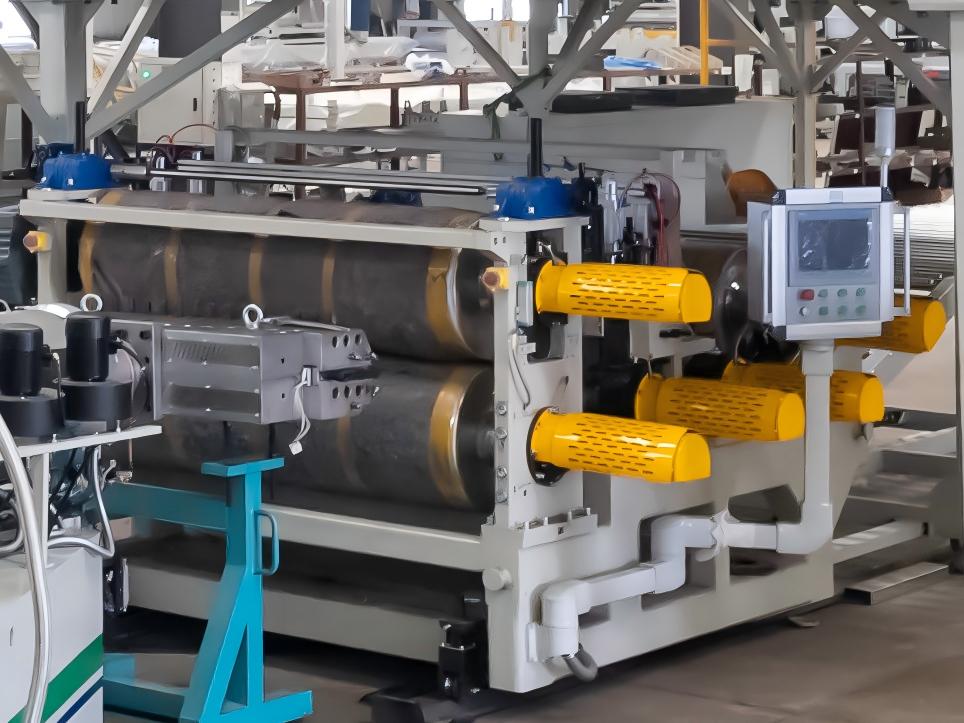
To identify the source, inspect the sheet before and after each major processing stage. If the sheet is smooth before entering the calender but develops scratches immediately afterward, concentrate on the rollers and nearby guides rather than changing the extruder settings.
Manufacturers should clean contact surfaces using approved procedures and inspect rollers for damage, wear, or deposits. Scrapers and cleaning tools should also be checked to ensure they do not introduce new scratches.
Routine inspection is particularly important in continuous production because a small defect on a roller can affect a large volume of material before it is detected.
Rough or Grainy SPC Flooring Surfaces
A rough or grainy SPC flooring surface can result from unstable plasticization, inconsistent material flow, poor filler dispersion, unsuitable temperature settings, or surface contamination. In some cases, the appearance may be related to the intended surface texture rather than a manufacturing defect, so the product specification should be considered first.
SPC compounds contain a substantial proportion of mineral filler in many formulations. If the raw materials are not mixed consistently, or if the compound is not processed properly, the resulting sheet may show uneven texture, visible particles, or a less uniform finish.
Start by checking the formulation, mixing consistency, feeding stability, and extrusion temperature profile. If the defect is distributed across the entire sheet, material preparation or plasticization may be involved. If it is concentrated in a specific area, inspect the die flow and forming surfaces.
Increasing temperature or screw speed is not automatically the right solution. The processing conditions should be adjusted according to the material formulation, equipment design, and observed defect pattern.
SKY WIN's PVC/WPC Flooring Base Material Extrusion Line highlights mixing and dispersion, thickness control, and cooling as important aspects of base-sheet production. The appropriate configuration depends on the material system and the required finished product.
Wavy Surfaces and Uneven Gloss Across the Sheet
Wavy surfaces, uneven gloss, and visible flow marks can indicate inconsistencies in material distribution, calendering, roller temperature, or cooling. The defect may appear across the entire sheet width or remain concentrated in certain areas.
If the sheet thickness also varies, inspect the die gap, melt distribution, roller alignment, and material flow. If the thickness is relatively uniform but the gloss changes, check roller temperature, contact conditions, surface cleanliness, and the consistency of the finishing process.
Cooling should also be considered. Uneven temperature changes across the sheet may affect surface appearance and dimensional stability, especially when line speed or sheet thickness changes.
A practical troubleshooting approach is to record the defect location, compare conditions across the sheet width, and observe the sheet at different stages. This helps distinguish an upstream extrusion issue from a problem introduced by the calendering or cooling system.
When correcting the problem, adjust one relevant variable at a time and observe the result. Changing die settings, roller temperatures, and line speed simultaneously can make the original cause more difficult to identify.
Wrinkles and Delamination During Online Lamination
Wrinkles, bubbles between layers, and delamination may develop when decorative film or a wear layer is applied to the SPC core sheet. These defects are different from surface irregularities formed during extrusion because the bonding interface is directly involved.
Common causes include uneven film tension, misaligned film feeding, incompatible materials, contamination at the bonding interface, and unsuitable roller pressure or temperature. If the core sheet is not stable enough when it reaches the laminating section, it may also be more difficult to achieve a consistent finish.
Manufacturers should check the film path, alignment, tension, roller contact, and actual temperature conditions. They should also confirm that the decorative film, wear layer, and core material are compatible with the selected lamination process.
SKY WIN's SPC flooring equipment provides separate control for online lamination and embossing. The settings should be established according to the material combination and required surface finish rather than using the same parameters for every product.
If the sheet is smooth before lamination but defects appear immediately afterward, prioritize the lamination system and bonding conditions. If the same defects already exist before the film is applied, investigate the upstream extrusion and forming stages first.
How to Troubleshoot SPC Flooring Surface Defects Systematically
The most effective way to troubleshoot SPC flooring surface defects is to identify where the defect first appears, examine the relevant process conditions, and make controlled adjustments. Randomly changing multiple machine settings can increase scrap and make the underlying problem harder to find.
A practical inspection process includes the following steps:
- Identify the defect: Record whether it appears as a bubble, black spot, scratch, rough patch, wave, or bonding problem.
- Locate the first appearance: Inspect the sheet after extrusion, calendering, cooling, and lamination.
- Check raw materials: Review formulation consistency, mixing, feeding, and contamination risks.
- Review operating conditions: Examine temperature settings, screw operation, line speed, roller settings, and cooling conditions.
- Inspect contact surfaces: Check the die, rollers, guides, and material-handling components for deposits or damage.
- Adjust one variable at a time: Make controlled changes within the equipment manufacturer's recommended operating range.
- Record the result: Compare defect frequency, sheet quality, and process stability before and after each adjustment.
For recurring defects, maintain a production record that includes the material batch, formulation, machine settings, defect location, corrective action, and inspection results. This helps operators recognize repeated patterns and improves consistency between production shifts.
When equipment configuration is suspected, review the complete SKY WIN flooring extrusion equipment range and discuss the specific product structure and defect pattern with the supplier. Equipment suitability, processing conditions, and maintenance requirements should be evaluated together.
Frequently Asked Questions About SPC Flooring Surface Defects
What causes surface defects in SPC flooring extrusion?
Surface defects can result from inconsistent raw materials, poor plasticization, unsuitable temperatures, unstable die flow, contaminated or damaged rollers, uneven cooling, and incorrect lamination conditions. The most reliable diagnosis starts by identifying the production stage where the defect first appears.
Why does SPC flooring develop bubbles or pinholes?
Bubbles and pinholes may be caused by moisture, trapped air, volatile materials, inconsistent mixing, or material degradation. If they appear only after lamination, inspect the film, bonding interface, and lamination conditions.
What causes black spots on SPC flooring sheets?
Black spots may come from contaminated raw materials, foreign particles, or degraded PVC deposits in the processing system. Check the feeding equipment, temperature history, extruder, die, and other material-contact components.
How can manufacturers prevent scratches on SPC flooring surfaces?
Inspect and clean rollers, guides, die edges, and other contact surfaces. Remove foreign particles using approved procedures and check for worn or damaged components. Comparing the sheet before and after each processing stage helps locate the source.
Why does an SPC sheet have a rough or grainy surface?
A rough surface may indicate inconsistent filler dispersion, unstable plasticization, unsuitable temperature settings, or contamination. Check the formulation, mixing process, feeding stability, and die or roller surfaces before changing machine speed.
What causes uneven gloss or wavy surfaces during SPC extrusion?
Possible causes include uneven die flow, inconsistent roller settings, temperature differences, and unstable cooling. Inspect sheet thickness and surface appearance across the width to determine whether the problem originates in extrusion, calendering, or cooling.
Why does decorative film wrinkle or separate from SPC flooring?
Wrinkles and delamination may result from uneven film tension, misalignment, contamination, incompatible materials, or unsuitable bonding conditions. Check the film path, roller pressure, temperature, and material compatibility.
Can a better SPC flooring extrusion line eliminate all surface defects?
A suitable production line can help improve process stability and surface consistency, but it cannot eliminate every defect automatically. Raw material quality, formulation, machine settings, maintenance, and operator practices remain important.
How should manufacturers choose equipment to improve SPC flooring surface quality?
Evaluate the extruder's suitability for the formulation, material mixing, die and calendering performance, roller condition, cooling capacity, and lamination configuration. Provide the equipment supplier with the target sheet specifications and examples of the defects encountered.
SKY WIN provides extrusion equipment for SPC and other flooring sheet applications. For manufacturers experiencing recurring surface defects, identifying the defect type, the stage where it first appears, and the current processing conditions is a useful starting point for evaluating equipment and process improvements.